If your vehicle earns money, downtime is never “just an inconvenience.” It costs you routes, customers, and momentum. Inspections are one of those things everyone knows they need, but most people still end up doing them at the last minute. Then the stress kicks in.
The good news is that a commercial vehicle inspection does not have to turn into a multi-day ordeal. Most inspection delays come from a handful of predictable issues: small air leaks, worn tires that “still look fine,” intermittent lighting problems, ABS warning lights that have been ignored, and brake adjustments that drift out of spec over time.
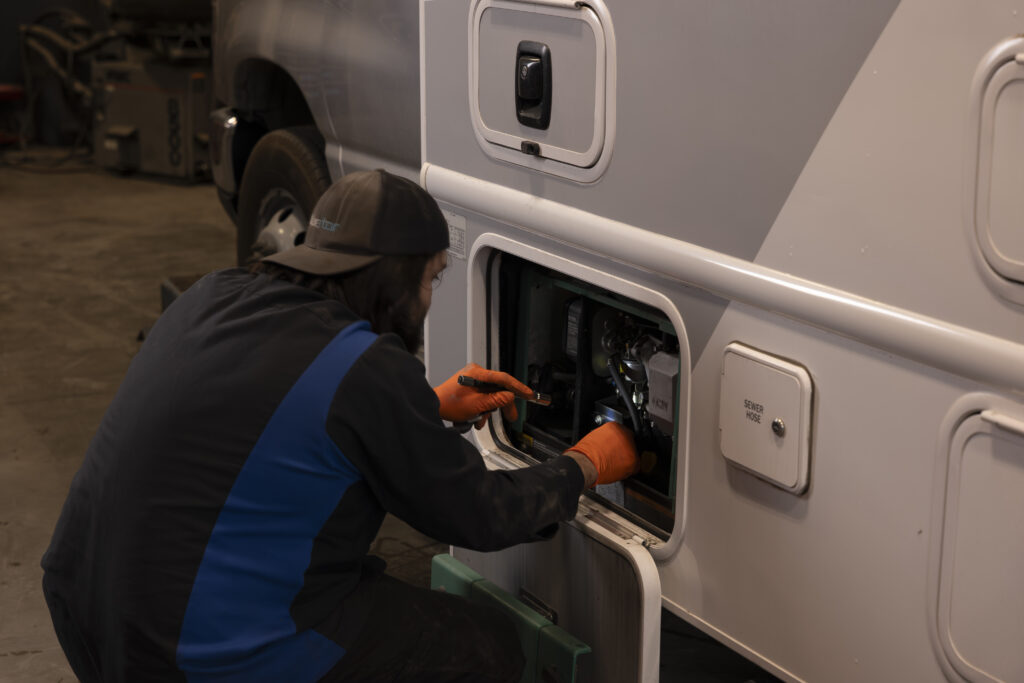
At BlueStar Coach Lines, the service team operates as a licensed inspection facility with certified mechanics and a shop built to handle big units properly. That includes motorcoaches, RVs, commercial trucks, trailers, and mini and school buses. If you are bringing in a large vehicle, you want a facility that is actually designed for it, not one that looks at your rig and immediately starts playing Tetris with their bays.
This article walks through what gets checked, what fails most often, and how to show up prepared so your inspection is more likely to be a one-and-done.
Why Inspections Matter More Than People Admit
Yes, inspections are compliance. But they are also protection.
- They keep your vehicle safe on the road.
- They reduce liability exposure if something goes wrong.
- They catch early wear before it becomes an expensive breakdown.
- They help you run a more predictable schedule.
If you operate passenger vehicles, inspections also protect your reputation. Customers might not understand mechanical details, but they do understand delays, roadside stops, and vehicles that feel “off.”
There is also a real financial argument. A failed roadside inspection from a Commercial Vehicle Safety Enforcement officer can result in out-of-service orders, fines, and towing costs that far exceed whatever a proactive repair would have cost. In British Columbia, the consequences of operating a non-compliant commercial vehicle extend beyond inconvenience — they can affect your operating authority and your safety rating as a carrier.
Scheduling a proper inspection at a licensed facility in Kelowna before those problems surface is simply a better business decision.
The BC Commercial Vehicle Inspection Program
 British Columbia operates under a mandatory Commercial Vehicle Inspection Program (CVIP) administered through ICBC. Vehicles over a certain weight class, along with buses, school buses, and certain passenger vehicles, are required to be inspected at licensed facilities on a regular schedule.
The interval depends on vehicle class and use. Many commercial passenger vehicles require inspection every six months. Cargo vehicles may have different schedules. Operating without a valid inspection sticker is not just a compliance gap — it is a liability.
BlueStar Mechanical Services is a licensed CVIP inspection facility, which means inspections performed there count toward your compliance requirements. Not every shop in Kelowna is licensed for this, and not every shop has the bay size, lifts, and tooling to handle coaches, heavy trucks, and large RVs efficiently. If you are bringing in a large vehicle, that capability gap matters.
What Typically Causes a Failed Inspection
Most people expect a failed inspection to mean “major repairs.” In reality, failures are often death by a thousand paper cuts.
Here are common issues that frequently show up:
- Air leaks, even small ones
- Brake performance or adjustment problems
- Trailer lighting faults, including corroded connectors
- Uneven tire wear or insufficient tread depth
- Steering and suspension play
- Exhaust leaks or unusual noise
- ABS faults or warning lights
None of these are rare, and most can be addressed efficiently if you catch them early. The frustrating part is that many of these issues were visible weeks before the inspection. They just were not acted on.
This is exactly why showing up with a little preparation beats walking in cold.
A Practical Pre-Inspection Checklist
If you want to pass the first time, do a quick pre-check before you book. You do not need to be a mechanic. You just need to be observant.
1) Lights and Electrical, Including Trailer Connections
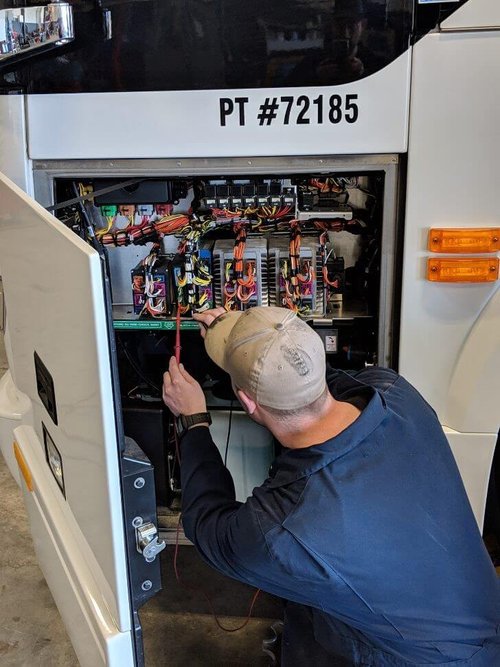 Walk around the vehicle. Actually check every light. Do not assume.
- Headlights and high beams
- Turn signals, front and rear
- Brake lights
- Marker lights
- Reverse lights, if applicable
- Trailer lights and wiring integrity
- Trailer plug for corrosion and fit
Electrical issues are notorious because they can be intermittent. The light works at noon and fails at 6 p.m. when it is cold and wet. If you notice any flickering, delayed activation, or bulbs that cut out under vibration, flag those before your appointment.
2) Tires and Wheels
Tires get people every time because “looks fine” is not the same as “meets spec.”
- Measure tread depth and do not eyeball it
- Check sidewalls for cracks, bulges, or visible cords
- Look for uneven wear patterns, which can signal alignment or suspension problems
- Look for signs of wheel movement, such as rust trails around lug studs
For large vehicles operating in the Okanagan, seasonal temperature swings accelerate sidewall degradation. Tires that held up through summer may show stress cracks by the following spring.
3) Brakes: Air or Hydraulic
Braking systems are a primary safety focus and a major reason vehicles fail.
- Any pulling to one side under braking?
- Any vibrations or grinding?
- Any warning lights related to brakes or ABS?
- For air brakes: listen for leaks with the engine off, watch pressure build time, confirm the parking brake holds on a grade
Air brake systems require particular attention. Slack adjuster travel, chamber condition, and valve function are all items inspectors examine closely on commercial vehicles.
4) Steering and Suspension
This is where “it drives fine” can still hide problems.
- Excessive play in the steering wheel
- Drifting, wandering, or uneven tracking on a straight road
- Visible leaks from shock absorbers
- Clunks or noises over bumps or during turns
Steering and suspension issues are often masked by driver adaptation. If someone has been driving the same vehicle for months, they may not notice gradual changes. A fresh set of eyes matters.
5) Fluids and Obvious Leaks
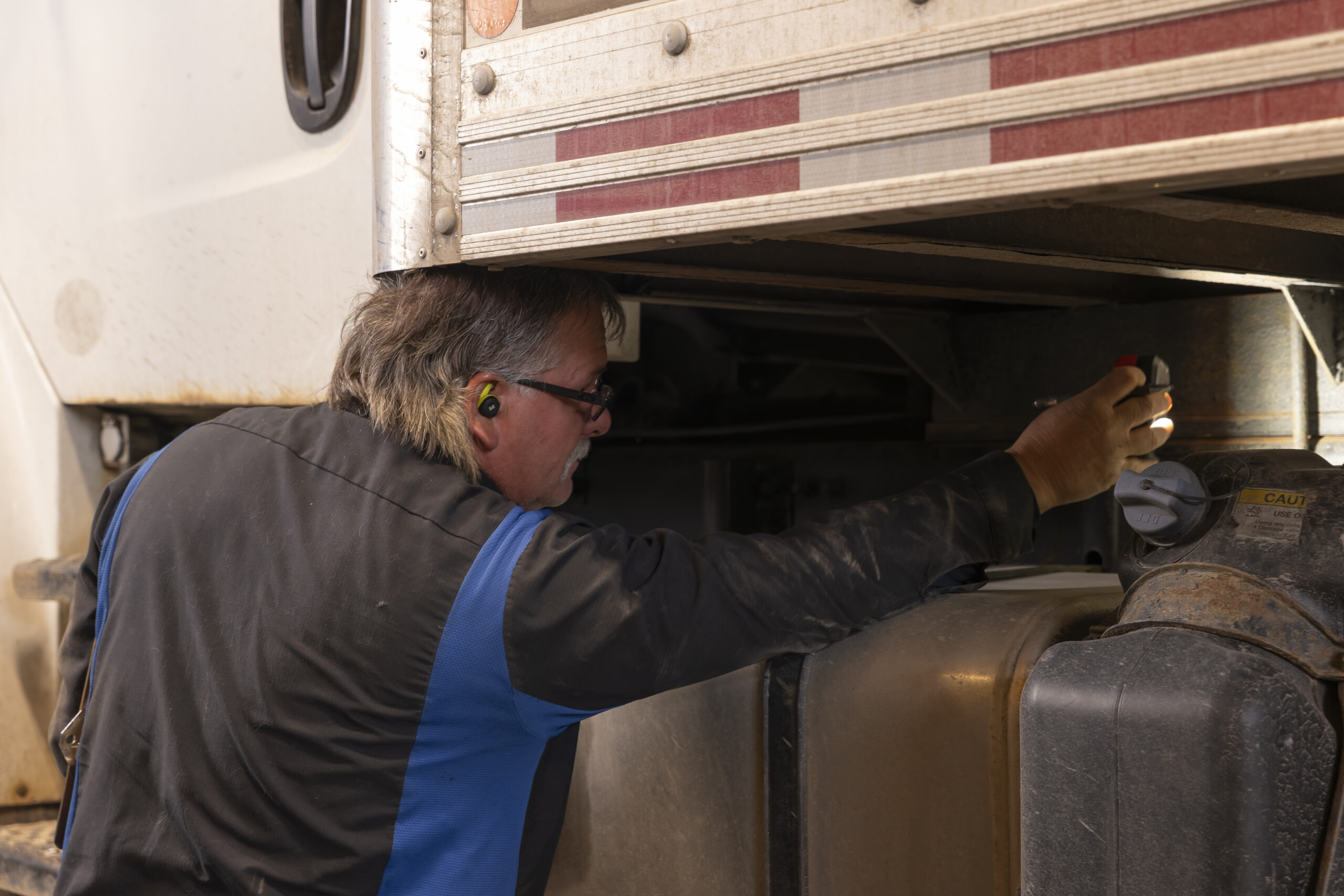
Look under the vehicle before your appointment. If you see fresh fluid, do not ignore it.
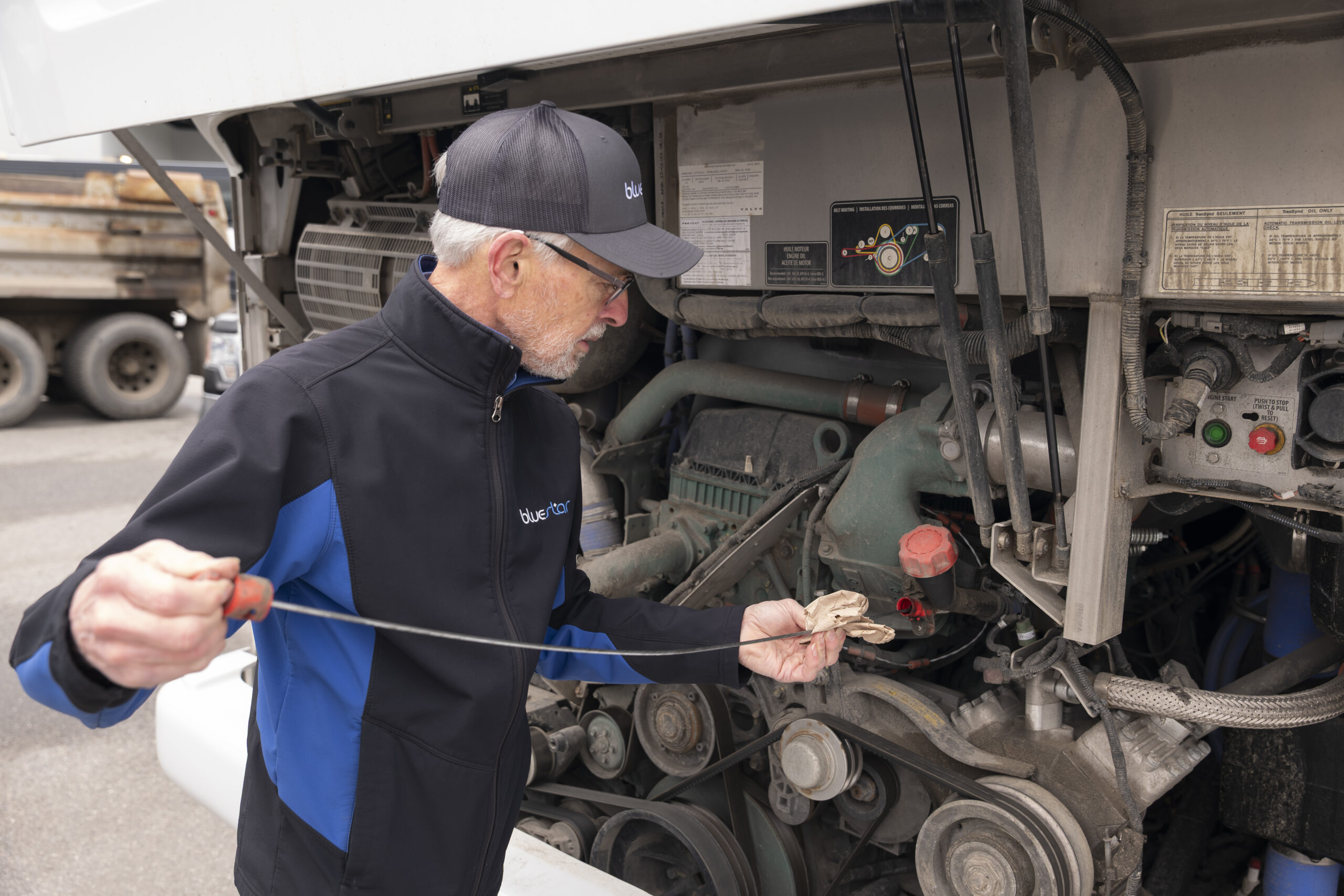
- Engine oil
- Coolant
- Power steering fluid
- Brake fluid
- Fuel seepage
- Signs of exhaust soot where it should not be
A drip that “has been there forever” is still a drip. Inspectors will note it, and ignoring it at the inspection stage means fixing it under pressure afterward.
What Inspectors Care About Most
Some systems get extra attention because failure has higher consequences. If you want to think like an inspector, prioritize these areas.
Brakes and Brake Balance
Inspectors will look at braking function and consistency across axles. On heavy vehicles, small braking imbalances are amplified by weight, momentum, and road grade. This is especially relevant in the Okanagan, where commercial operators regularly deal with grades, mountain passes, and long descents. Brake performance that seems acceptable on flat ground can become a serious liability on a downhill run.
Tires, Load Rating, and Condition
Tires are not just rubber. They are safety components rated for specific loads and speeds. Uneven wear signals deeper problems. An inspector who sees cupped wear on a drive axle is going to look harder at the suspension on that corner of the vehicle.
ABS and Warning Systems
If your ABS light is on, treat it as urgent. Not because your brakes suddenly “do not work,” but because your safety margin is reduced. ABS faults also lead directly to inspection failure. They tend to surface at exactly the wrong time, during a check, during a cold morning start, or mid-route on a wet highway.
Structural and Mechanical Condition
Inspectors look for unsafe wear, cracks, corrosion, and signs that something is failing. Kelowna winters are relatively mild compared to much of BC’s interior, but road salt, freeze-thaw cycles, and wet shoulder seasons still take a real toll on frames, undercarriage components, and connection points.
Seasonal Considerations for Okanagan Operators
Operating in the Okanagan Valley means dealing with genuine seasonal variation. Hot, dry summers. Wet autumns. Winter roads that range from clear to icy depending on elevation and time of day.
Each season creates different failure patterns worth anticipating:
Before summer: AC systems, cooling systems, tire condition after spring road damage, and brake fluid condition are worth checking. Heat loads up cooling systems and puts pressure on anything that was marginal heading into the season.
Before winter: Air system integrity, lighting and electrical connections, tire tread depth, and brake function all become critical. If you operate routes over the Coquihalla, Connector, or through the Monashees, winter readiness is not optional, it is a safety requirement.
Aligning your CVIP inspection with seasonal preparation gives you two outcomes from one appointment and one set of downtime.
What to Bring to Your Appointment
This sounds small, but it makes a real difference.
- Prior inspection paperwork or current CVIP certificate
- Maintenance history, even simple notes
- A list of recurring issues, warning lights, or recent symptoms
- Fleet details if you are managing multiple units
A five-minute conversation at check-in can save hours later. If you know the ABS light has been coming on intermittently, say so. That context helps the technician find the problem faster rather than starting from scratch.
What Happens if Something Fails
Failing an inspection is not the end of the world. It is a decision point.
Some issues are minor and quick. Others require deeper diagnostics and a more thoughtful repair plan. The important part is solving the root cause so you are not back in two weeks for the same warning light.
If you operate a fleet, track patterns across units. If one vehicle consistently eats tires faster than the others, that is not bad luck. It is a sign something in the alignment, suspension, or loading setup is off. BlueStar’s team can help identify those patterns and build a service plan that addresses them systematically.
Booking a Commercial Vehicle Inspection in Kelowna
If you need a commercial vehicle inspection in Kelowna and you want it done properly, contact BlueStar Mechanical Services at 250-765-9020 or [email protected]. The shop is equipped to handle motorcoaches, RVs, commercial trucks, trailers, mini buses, and school buses.
The goal is simple: show up prepared, fix what matters, pass the first time, get back on the road.