If you have ever tried to coordinate vehicle service across multiple stops, you already know how it goes. You book mechanical repairs at one place. Then you need to wash the vehicle somewhere else that can actually accommodate its size. Then you need a sani-dump that does not require navigating a tight city campground. By the time you have handled all of it, you have burned most of the day just moving between locations.
A facility that handles mechanical service and practical essentials in one place saves significant time, especially for RV owners, coach operators, and commercial fleets where every hour of downtime has a direct cost.
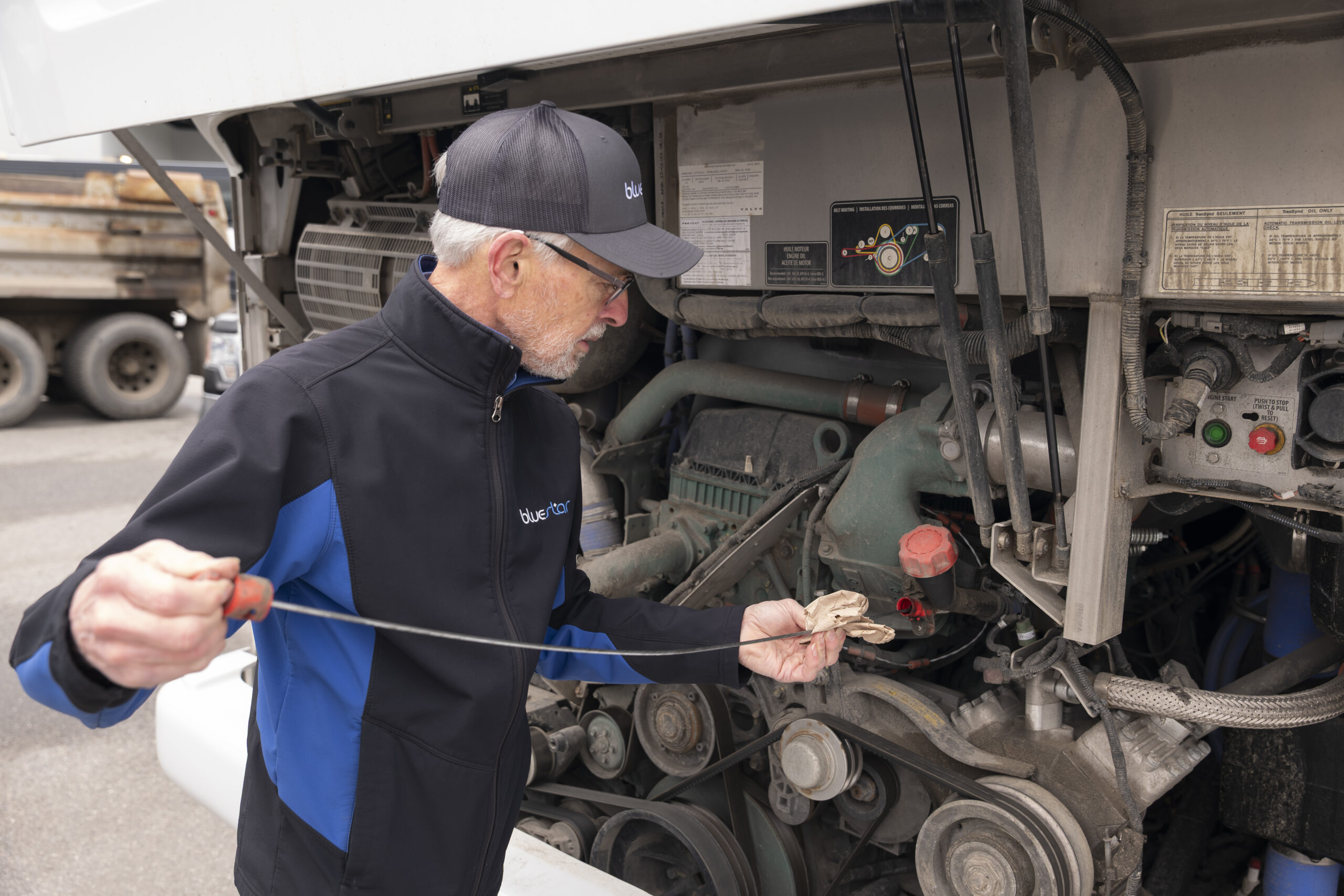
BlueStar Mechanical Services in Kelowna offers trailer repairs, a wash bay sized for large vehicles, and a sani-dump, alongside full mechanical service for RVs, motorcoaches, buses, and commercial units. This article covers what those services involve, why they matter, and what to watch for when maintaining trailers and large vehicles in the Okanagan.
The One-Stop Advantage: Why It Matters More Than It Sounds
 The logistics of large vehicle service are genuinely complicated.
Most wash bays are sized for passenger vehicles or light trucks. A motorcoach or a long commercial trailer does not fit in the average carwash or detail bay. Finding a facility with the space and equipment to properly wash a large vehicle usually means a separate trip to a specialized location.
Sani-dump stations are even harder to find conveniently. Many campground facilities are inaccessible to commercial vehicles, or require overnight stays that add cost and scheduling friction. Municipal sani-dumps are inconsistently available across the Okanagan.
Trailer repairs often require a shop that can accommodate the unit, which eliminates a large portion of general automotive shops that simply cannot fit a 53-foot trailer or a full-size coach.
When one facility handles all of this, you save:
- Driving time between multiple locations
- Scheduling friction trying to coordinate appointments
- The risk of damage during extra transit between service stops
- Management time coordinating multiple vendors
For fleet operators in Kelowna managing multiple units, the time savings per vehicle per service cycle adds up quickly. For RV travellers passing through the Okanagan, it means one efficient stop rather than a half-day logistics exercise.
Trailer Repairs: The Hidden Troublemaker in Commercial Operations
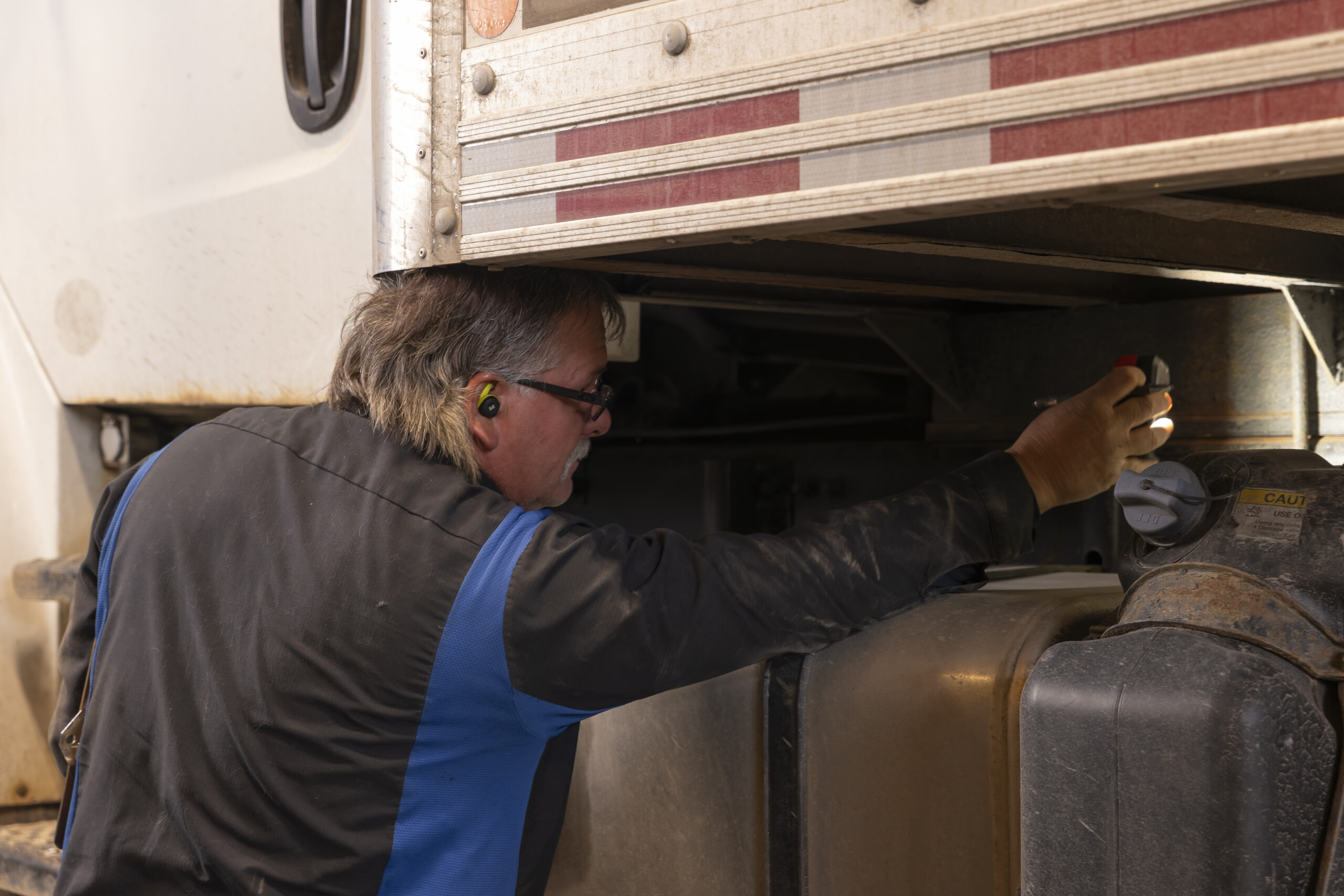
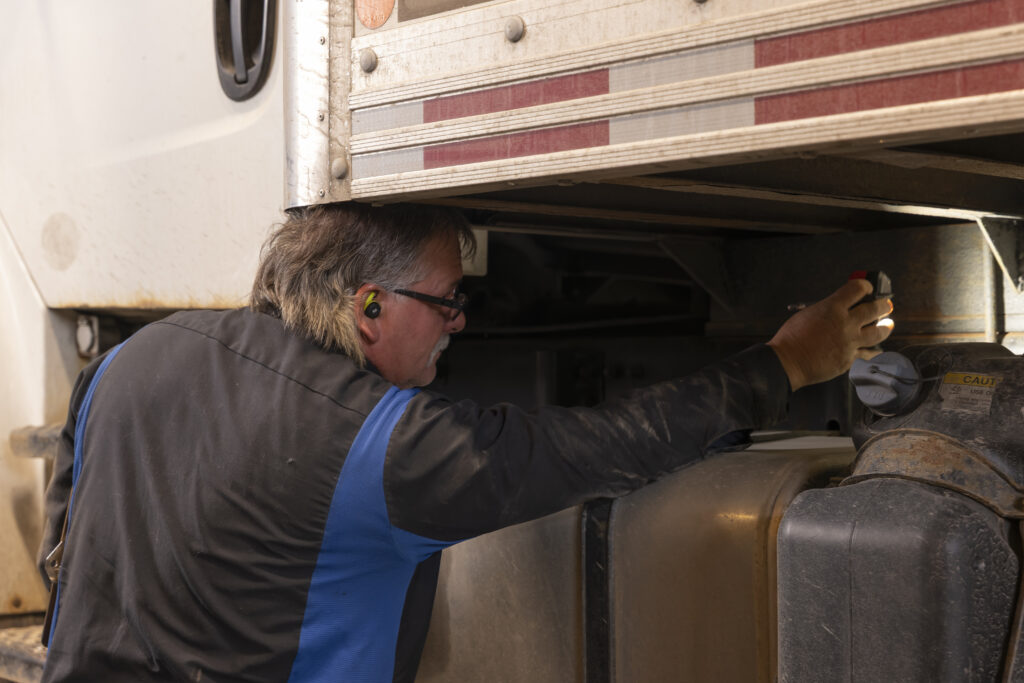
Trailers often get less attention than the trucks or coaches pulling them. They do not have dashboards. They do not generate warning lights. They do not have engines that make sounds when something is wrong.
Then something fails and it becomes a roadside situation. Sometimes worse.
Common Trailer Problems to Watch For
Wiring and lighting failures. Trailer wiring is subjected to constant flex, vibration, exposure to road moisture and salt, and physical damage from rocks and road debris. Wiring harnesses degrade gradually. Connectors corrode. By the time a light fails completely, the underlying deterioration has usually been underway for some time.
Brake wear and imbalance. Trailer brakes, whether electric, hydraulic, or air-operated, wear unevenly when they are out of adjustment or when components are aging. Imbalanced braking creates uneven wear, causes the trailer to push the tow vehicle under braking, and creates safety risk on grades.
Coupling and hitch wear. Fifth wheel couplings and ball-and-socket hitches wear over time. Loose or worn coupling systems create handling instability and noise, and can create dangerous situations during braking or evasive manoeuvres.
Tire and bearing problems. Trailer tires are often underinspected because the trailer is simply “along for the ride.” Tire age, sidewall condition, and bearing health are all worth checking regularly. Trailer tire blowouts and bearing failures cause damage quickly.
Suspension wear. Leaf springs, rubber bushings, and suspension components on trailers work hard under load. Worn suspension creates handling issues and accelerates tire wear.
Air system leaks on air-braked trailers. For trailers equipped with air brakes, air leaks in chambers, lines, and fittings are a primary maintenance concern and a direct inspection failure point.
A Monthly Trailer Check You Can Actually Do
You do not need a full mechanical inspection to catch early warning signs. A basic monthly check takes about fifteen minutes and can prevent the kinds of failures that become expensive surprises.
Lighting and signals:
- Test all running lights, turn signals, and brake lights
- Inspect marker lights and reflectors
- Check trailer plug connector and look for corrosion or bent pins
Wiring:
- Walk the harness length and look for exposed or chafed sections
- Check where wiring passes through grommets or over frame edges
- Look for wiring that has been repaired with tape. This is often a sign of recurring damage in that location.
Tires:
- Check pressure with a gauge. Do not estimate by feel on large tires.
- Look at tread wear pattern across the full width
- Inspect sidewalls for cracks, bulges, or embedded objects
- Check age: trailer tires over six years old should be inspected carefully regardless of tread depth
Coupling and hitch:
- Confirm the coupling locks securely and shows no unusual play
- Inspect the kingpin area or ball socket for wear
- Check safety chains and breakaway cable if equipped
Undercarriage and suspension:
- Look for fresh fluid leaks or grease trails
- Listen for new clunks or squeaks when moving the trailer
- Check for visible cracking in spring leaves or suspension mounts
Air leaks (if applicable):
- With air pressure charged, listen for hissing from chambers, lines, and fittings
- Check the air brake system hold time
If something has changed from your last check, it usually means something has changed in the vehicle. New sounds, new play, new leaks are all worth investigating before they become failures.
Why a Wash Bay Matters for Large Vehicles
A wash bay is not just about presentation, though that matters for passenger operations. It is also a maintenance and safety practice.
Visibility and safety. Clean lights and reflectors are more effective. Road grime and mud accumulation on lighting significantly reduces visibility at night and in wet conditions. This is a safety issue, not just an appearance issue.
Inspection access. Trying to inspect a vehicle covered in road grime, salt residue, and mud is harder and less accurate than inspecting a clean vehicle. Wash bay access means a more thorough look at what is actually there.
Corrosion prevention. Road salt from Okanagan winter driving accumulates under vehicles and in frame cavities. Regular washing, particularly of the undercarriage, significantly reduces long-term corrosion damage. For commercial vehicles with a service life of ten to twenty years, this maintenance step has real long-term value.
Professional appearance. For coaches, buses, and passenger vehicles, the cleanliness of the vehicle is part of the customer experience. A clean coach signals professionalism before anyone steps on board. A dirty one signals the opposite.
The challenge is finding a wash bay that can physically accommodate a motorcoach, a long trailer, or a large commercial vehicle. Most standard wash facilities are sized for light trucks at best. A facility with a proper large-vehicle wash bay removes that friction entirely.
Sani-Dump Access: Practical and Underrated
Sani-dump access matters most when you do not have convenient options, which is more common than it should be in the Okanagan’s commercial and RV service landscape.
For RV owners, managing sanitation properly requires either a campground hookup, a municipal dump station, or a service facility with on-site access. When you are already at a service facility for mechanical work or a wash, having sani-dump access on-site is simply more efficient than making a separate stop.
For motorcoach operators, sanitation management between routes is a regular operational need. Having it available at the same facility where mechanical service and washing are handled saves time and simplifies scheduling.
On-site sani-dump access at BlueStar means one stop handles mechanical, wash, and sanitation needs. For operators managing routes and schedules in the Okanagan, that simplicity has direct operational value.
The Commercial Fleet Perspective: Time is the Real Currency
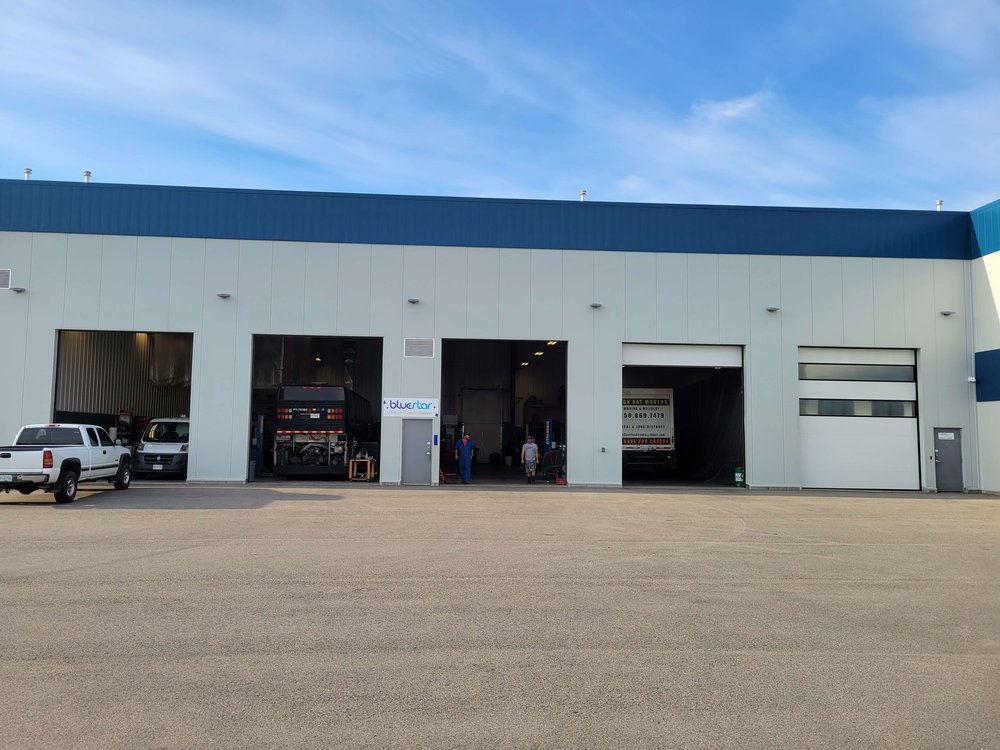 For fleet operators in Kelowna and across the Okanagan, the value of a one-stop service facility goes beyond convenience. It is about throughput.
Every hour a vehicle spends travelling between service locations is an hour it is not generating revenue. Every logistical complication, like a wash bay that cannot accommodate the vehicle, a sani-dump that requires a separate detour, or a mechanical shop that needs to coordinate with another vendor for trailer repairs, adds friction and cost.
A facility that handles mechanical repairs, trailer service, washing, and sanitation in one location reduces that friction systematically. For a fleet running multiple units per week through a service cycle, the time saved per vehicle compounds quickly.
Booking Trailer Repairs and Support Services in Kelowna
Whether you need trailer repairs, a wash for your motorcoach, sani-dump access, or any combination of the above, contact BlueStar Mechanical Services in Kelowna.
Call 250-765-9020 or email [email protected] to schedule service or ask about availability.
The facility is equipped for large vehicles, including RVs, motorcoaches, trailers, and commercial units, and offers the practical services that make managing a large vehicle or fleet simpler and more efficient.