Fleet maintenance is not glamorous. It is also not optional, at least not if you care about uptime.
The operators who look “lucky” are usually just consistent. They have a routine. They fix small problems early. They schedule work before a deadline forces their hand. That is the difference between a fleet that runs smoothly and a fleet that always feels one breakdown away from chaos.
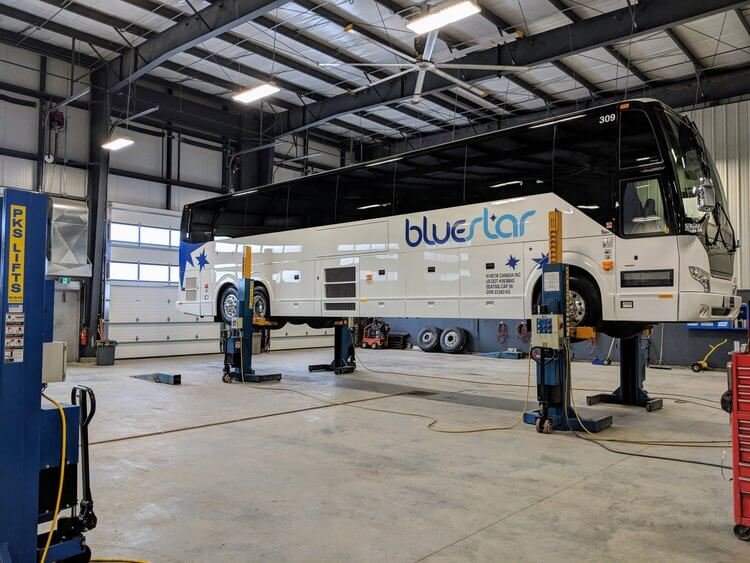
BlueStar Mechanical Services supports commercial operators across the Okanagan with inspections, ABS diagnostics, air and hydraulic brake service, diesel repairs, trailer repairs, and fleet maintenance. The facility is set up for large vehicles, which matters when you are trying to move quickly and stay organized.
The Real Cost of Reactive Maintenance
People often compare preventive maintenance cost to “doing nothing.” That is the wrong comparison.
The real comparison is preventive maintenance versus the full cost of a surprise breakdown:
- Missed routes or missed deliveries
- Towing fees and emergency labor rates
- Overtime for staff covering the gap
- Secondary damage when a small leak becomes a major failure
- Reputation damage, especially in passenger operations
A coach that breaks down on the side of Highway 97 between Kelowna and Penticton does not just cost you the tow. It costs you the contract, the review, and sometimes the relationship. For operators running scheduled routes or charter services in the Okanagan Valley, a single preventable breakdown can have consequences that stretch well beyond the repair bill.
A good maintenance plan does not eliminate repairs. It reduces surprises and gives you control over timing. You decide when a vehicle is in the shop. A breakdown decides for you, usually at the worst possible moment.
Understanding Maintenance as a Business System
The operators who run reliable fleets tend to think about maintenance the same way they think about any other part of their operation: as a system with inputs, outputs, and predictable outcomes.
Inputs are inspection schedules, interval-based service, and driver reporting. Outputs are uptime, compliance, and reduced repair costs over time. The reliability of the output depends on the consistency of the input.
This is not complicated. It just requires treating maintenance as a scheduled business activity rather than a reaction to problems.
For commercial operators in Kelowna and across the Okanagan, whether you are running coaches, charter buses, service trucks, or a mixed fleet, the fundamentals are the same.
A Fleet Maintenance System That Actually Works
The best fleet plans are not complicated. They are consistent. Think in three layers.
Layer 1: Daily or Per-Trip Checks (5 to 10 Minutes)
 This is your early-warning system. The point is not to replace mechanical inspection. It is to catch changes early before they become failures.
- Lights and signals, front and rear
- Tires for obvious damage, low pressure, or debris
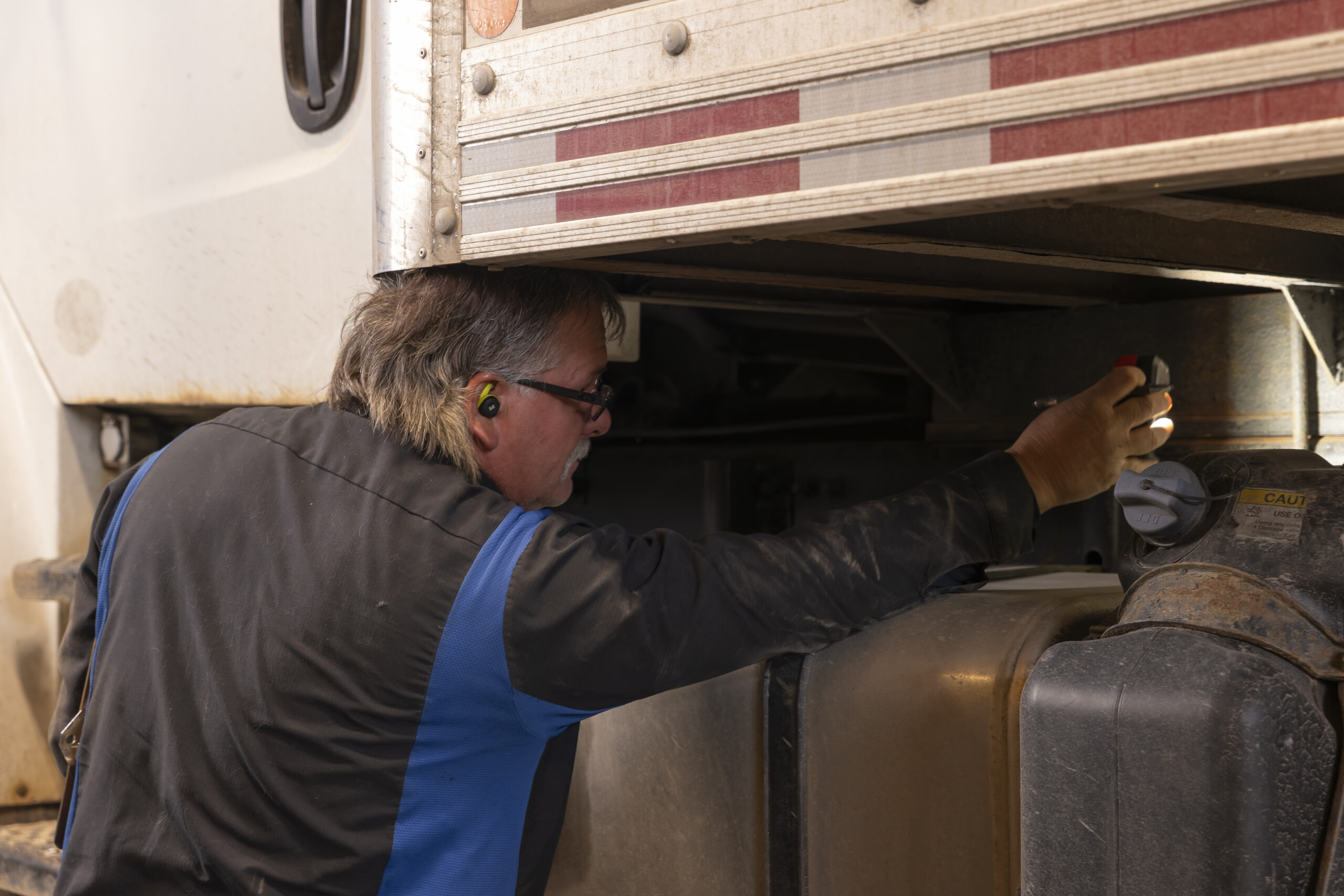
- Leaks under the vehicle before departure
- Warning lights on the dash
- Brake feel and steering feel during the first few minutes of driving
When drivers or operators report small changes early, maintenance becomes cheaper and faster. When they ignore changes and keep driving, the repair cost compounds.
Build driver reporting into your routine. A simple form or a group message thread where drivers can flag concerns is enough to start. What matters is that reporting is normalized and acted on.
Layer 2: Interval-Based Service
 This is the backbone of any fleet maintenance plan. The goal is to service key systems before they fail rather than after.
Intervals depend on several factors:
- Mileage and engine hours
- Load and route type, since city stop-and-go creates different wear than highway cruising
- Weather and road conditions, since the Okanagan’s summer heat and winter salt both accelerate wear in different systems
- Age of the vehicle and its history
For most operators, a reliable rhythm looks something like this:
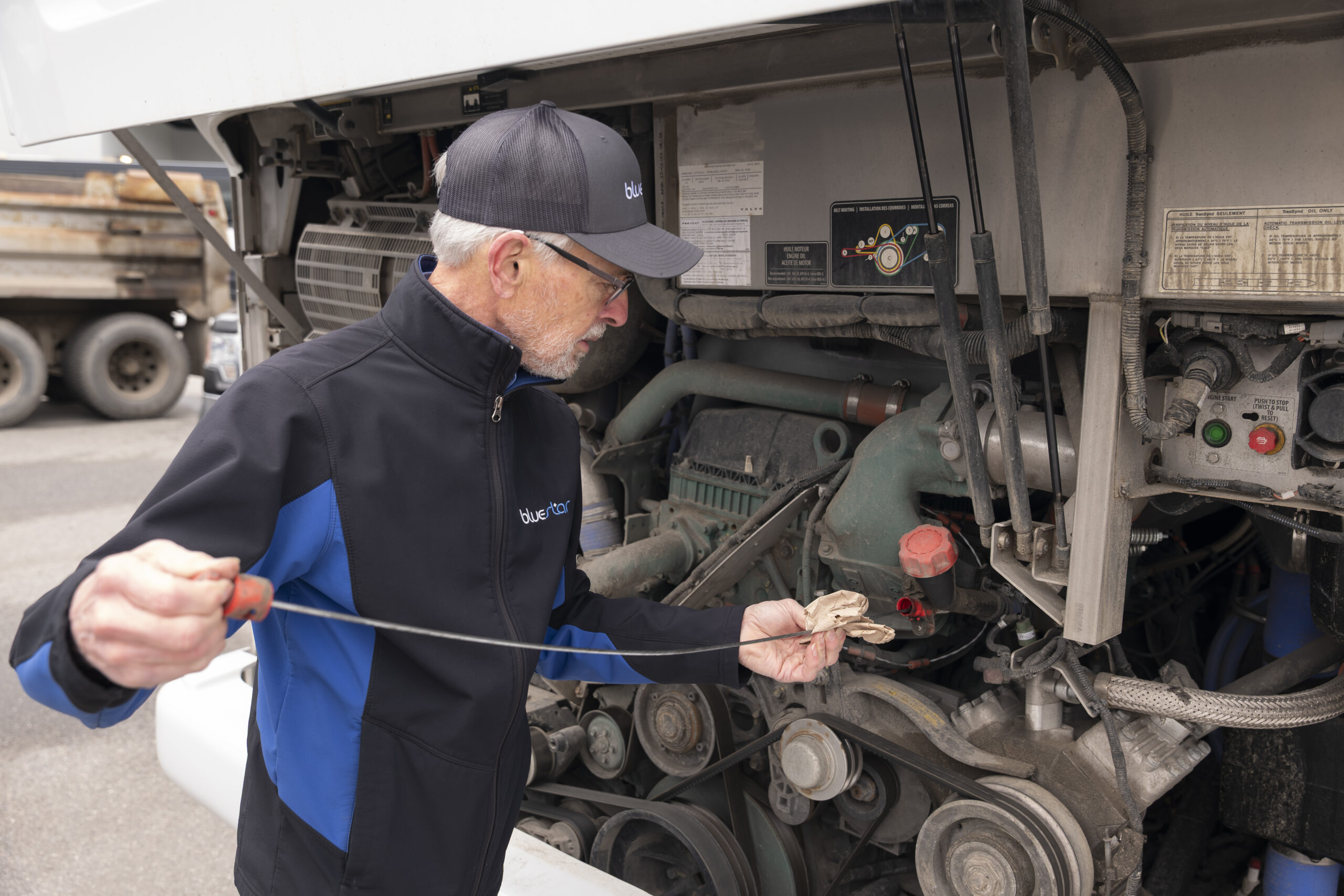
- Regular fluid inspections and top-ups
- Deeper brake and suspension inspections every few months
- Seasonal preparation aligned to spring and fall
- Annual or semi-annual comprehensive review timed around CVIP requirements
If you run coaches or buses in the Okanagan, seasonal prep is especially important. Summer heat exposes cooling system weaknesses, AC performance gaps, and tire stress. Winter brings electrical and air system vulnerabilities, lighting issues, and increased brake demand.
Layer 3: Documentation and Compliance
 Good records protect you in ways that are easy to overlook until something goes wrong.
- Inspections become smoother when you can show a history
- Recurring issues become visible when they are written down
- Replacement decisions become easier when you can see mileage and service trends
- Liability exposure is reduced when you can demonstrate due diligence
You do not need sophisticated software to start. Even a shared spreadsheet with unit numbers, service dates, mileage, and notes will make a meaningful difference over time. What matters is that someone owns the record and updates it consistently.
What Fleets Miss Most Often Until It Becomes Expensive
Here are the “slow problems” that operators tend to overlook until they become big repairs:
Brake wear trends and adjustment issues. Brakes that are slightly out of adjustment do not feel dramatically different day to day. But over time they cause uneven wear, heat damage, and eventually safety failures.
ABS faults that come and go. Intermittent ABS warning lights are easy to dismiss because the light is not always on. The underlying cause, often a wheel speed sensor, a connector, or a wiring issue, does not go away on its own.
Cooling systems that are “fine” until they are not. Coolant that is old, contaminated, or low does not cause problems right away. But under sustained load in summer heat, or after a long climb, a marginally performing cooling system will fail.
Suspension wear that quietly destroys tires. Worn bushings, sagging springs, and loose components change how weight distributes across the tires. The result is premature, uneven wear. If you find yourself replacing tires more often than seems right, the suspension is the place to look.
Trailer wiring issues that become roadside lighting failures. Trailer wiring is subject to constant flex, vibration, moisture, and salt exposure. It degrades gradually. Then it fails, usually during an inspection or on a dark stretch of highway.
Scheduling Matters as Much as the Work Itself
Fleet maintenance is not just about fixing vehicles. It is about planning downtime so it happens on your terms.
A smart maintenance schedule:
- Groups related work so you are not bringing the same vehicle back repeatedly for small items
- Staggers vehicles so you do not lose too many units at once
- Prioritizes safety-critical systems (brakes, tires, lighting) before comfort and convenience items
- Books inspection windows ahead of time so you are not scrambling to fit a CVIP appointment around a busy period
For passenger fleet operators in Kelowna and the Okanagan, predictable scheduling is directly connected to customer satisfaction. A coach that is in the shop unexpectedly during peak season is a problem that starts with a maintenance gap weeks or months earlier.
The Advantage of a Facility Built for Large Vehicles
Not every shop in Kelowna can handle coaches and heavy commercial units efficiently. Bay size, lift capacity, tooling, and technician experience with heavy-duty systems all make a difference.
A shop that normally works on passenger cars can technically work on a bus. But the job takes longer, requires more improvisation, and sometimes cannot be completed properly without the right equipment. For fleet operators trying to minimize downtime, that inefficiency adds up.
BlueStar’s setup is built to accommodate large vehicles, including coaches, buses, and commercial fleets across the Okanagan. That means fewer scheduling complications, faster turnarounds, and service from technicians who are familiar with the systems on your vehicles.
Fleet Services That Prevent the Most Downtime
If you are prioritizing where to focus your maintenance attention first, start with the systems that create the most unplanned downtime:
- Brake systems, air and hydraulic: the highest-consequence failure point on any commercial vehicle
- ABS diagnostics and electrical faults: intermittent problems that cause inspection failures and safety risks
- Diesel reliability and early symptom checks: power loss, rough idle, and starting issues are almost always progressive
- Exhaust repairs and leak prevention: exhaust issues affect performance, emissions compliance, and passenger comfort
- Trailer repairs, especially wiring and brake systems: trailers are often the most neglected part of a commercial operation
Small issues in these five areas account for the majority of unplanned downtime for commercial fleets. Staying ahead of them is the most straightforward way to run a more reliable operation.
A Simple Plan You Can Implement This Month
If you want a realistic starting point that you can actually execute, here is a five-step approach:
- List every unit with current mileage or engine hours and last known service date
- Assign baseline service intervals, even rough ones are better than none
- Track recurring issues by unit: note any ABS faults, unusual tire wear, brake symptoms, or warning lights
- Decide what triggers immediate service versus what goes on the watch list
- Book your next inspection window now, before the schedule forces your hand
This does not need to be a complex system. It just needs to exist and be followed. The operators who run reliable fleets are not doing anything extraordinary. They are just doing the basics consistently.
Ready to Set Up a Fleet Maintenance Routine in Kelowna?
If you want help building a maintenance plan for your fleet, or if you need a shop that can handle coaches, buses, commercial trucks, and trailers across the Okanagan, contact BlueStar Mechanical Services at 250-765-9020 or [email protected].
The shop is in Kelowna and understands what commercial operators actually need: uptime, safety, and predictable scheduling.